Brand-published editorial by Bracelet Works by Paradise. We distinguish source facts from original collection-planning suggestions.
Start with a signal, then ask a buying question
A styling guide, a retailer’s collection and a buying conversation answer different questions. The first shows how a brand presents a look. The second shows an offer. The third can reveal whether that offer serves your customers. None, by itself, establishes global demand for a bracelet material, price point or construction. Treat the examples below as leads for a collection brief, checked on 11 October 2026.
Our proposed method is to write one buying question for each signal, make a small sample shortlist and decide what evidence would change the plan. Keep the audience, destination and intended selling unit visible throughout. This makes a trend note useful even when the next season brings a different color story.
Signal 1: A stack is a styling system
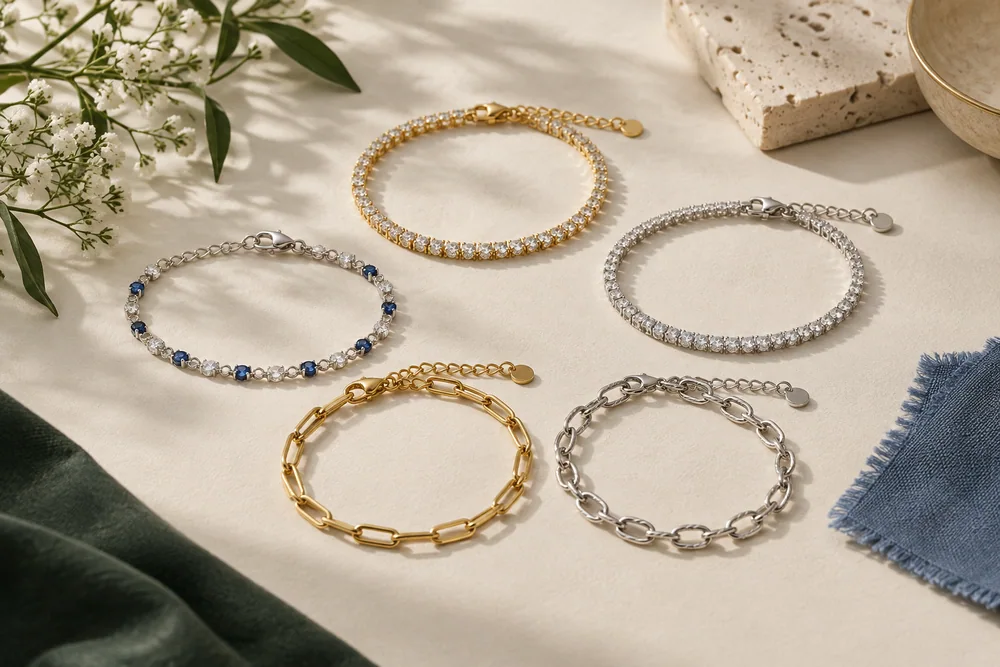
Swarovski’s stacking guide organizes advice around bracelet types, metal tones, watches and styling preferences. That is evidence of an editorial approach to stacking, rather than proof of sales growth.
For a boutique collection, try an anchor-and-companion brief: one slim continuous line, one contrasting silhouette and an optional accent. Ask whether shoppers want to buy one piece, choose their own combination or receive a fixed set. Photograph the same references alone and together. A stack should remain understandable when a buyer removes one component. Record fit and closure requirements separately; three attractive photographs do not establish that three samples sit comfortably together.
Source context: Swarovski: How to Stack Bracelets ↗
Signal 2: Metal-tone mixing can be deliberate
The Swarovski guide includes mixed metal styling. This provides a useful design question: can a collection connect warm and cool tones through a repeated visual element?
Our suggestion is to test two alternatives around the same silhouette: a consistent tone and an intentional contrast. Keep the stone-color direction constant so feedback addresses the tone mix rather than several changes at once. Describe gold-tone or silver-tone appearance separately from actual metal and plating specifications. Confirm the material and finish for each requested version with the supplier before writing customer-facing claims.
Source context: Swarovski: How to Stack Bracelets ↗
Signal 3: Gifts are organized around people and moments
Estella Bartlett’s graduation article addresses the cap, gown and guest outfit before linking to jewelry and gift options. Joma’s AW25 Q&A connects seasonal product ideas with presentation. These are examples of occasion-led content, with different publication periods; they are not a shared 2026 sales forecast.
For a gift-store buyer, build a brief around a recipient and a moment: bridesmaid thank-you, graduation congratulations or an everyday friendship gift. Decide what the card says, how the bracelet is presented and whether the recipient chooses the size. Keep the message original. A color, a sentiment and a complete retail unit can create a coherent story without reproducing another brand’s illustration or charm.
Source context: Estella Bartlett: Graduation styling guide ↗ · Joma Jewellery: New-season Q&A (AW25) ↗
Signal 4: Two colors can carry an occasion
enewton’s gameday collection groups sets by color combinations. The observable signal is the merchandising format: a two-color combination becomes a named choice.
A color-led sample proposal might pair a primary shade with a neutral, or offer two accent colors as separate pieces in one pack. Ask buyers which combinations fit their own local events. Describe colors without implying a relationship with a team, league or artist. If a brief includes a logo or protected artwork, obtain the appropriate authorization before development.
Source context: enewton: Gameday bracelet stacks ↗
A small test that produces a usable decision
Choose two concepts and present each in the same format: intended buyer, outfit or gifting context, reference photographs, requested fit, proposed contents of one selling unit and questions still open. Invite buyers to rank the concepts and explain what would prevent them from stocking either one. An attractive vote without quantity, timing or customer context is weak evidence for an order.
Keep a simple record of qualified interest, sample requests and the final approved specification. Separate traffic to the article from genuine purchasing enquiries. If one concept earns attention but no useful buying conversations, revise the audience or the offer before adding more variants. These are proposed validation steps, not results from a Bracelet Works sales test.
Sources & scope
Source material reviewed for this article. External links are references; no affiliation or endorsement is implied. Sources were checked on 11 October 2026. Trend signals are editorial observations, not evidence of bracelet sales or market size. Event dates, access and membership terms should be confirmed with the organizer.