Brand-published editorial by Bracelet Works by Paradise. We distinguish source facts from original collection-planning suggestions.
A working library for a buying conversation
Bracelet Works by Paradise is a bracelet manufacturing and wholesale brand. Our site introduces the relationship with PD Jewellery (Paradise Jewelry) and brings reference styles, development topics and assortment planning into one place.
The library helps you shortlist a visual direction: a slim crystal line, a slider-led reference, a broader statement shape or a coordinated color idea. The public reference number gives that discussion a stable starting point. It does not replace the specification for the version you want to order.
Source context: Bracelet Works: About the brand ↗ · Bracelet Works: Manufacturing ↗
Read appearance and construction separately
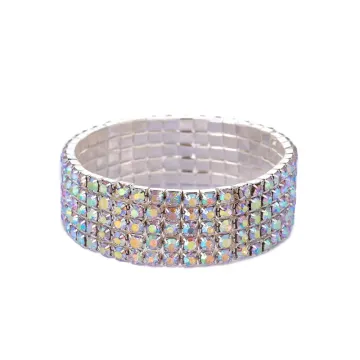
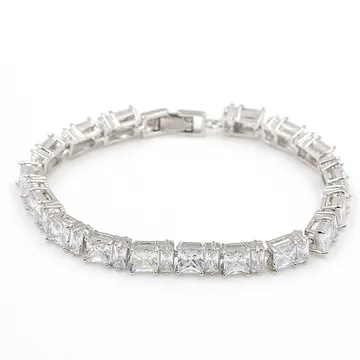
Start with what the photograph actually helps you compare: silhouette, visible arrangement, apparent color direction and the relationship between decorative elements. Then ask for the construction details that the front view may not settle, such as the fastening, opening, interior and component connections.
A category label is useful for browsing. It is not a substitute for reviewing the actual mechanism and dimensions of the selected sample. If you want to change a feature, describe the request explicitly rather than assuming that every reference offers the same development options.
Use a palette as a starting point
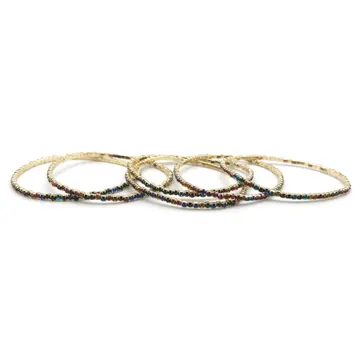
The assortment guide provides a way to discuss a defined 2 mm color program. It helps buyers organize proposed combinations and quantities. Other constructions need their own option discussion, rather than inheriting the choices of that program automatically.
Write stone-color direction and metal-tone appearance as separate fields. Screens, lighting and photography can change how a color is perceived, so discuss an appropriate physical reference and approve the final match on a sample. A photograph can start the conversation; it cannot establish a measured color tolerance.
Source context: Bracelet Works: Assortment guide ↗
Keep sample decisions together
A useful sample record connects reference, construction, dimensions, material, finish, color and packaging. Include which details were approved and which remain open. If the sample is revised, retain the earlier version and mark the change so subsequent discussion identifies the correct one.
For a stack or retail set, approve the combination as well as its individual components. Check the intended fit, movement, contact points and packing with the actual samples. Record the contents of one set before multiplying by the number of sets requested.
Recognize editorial images
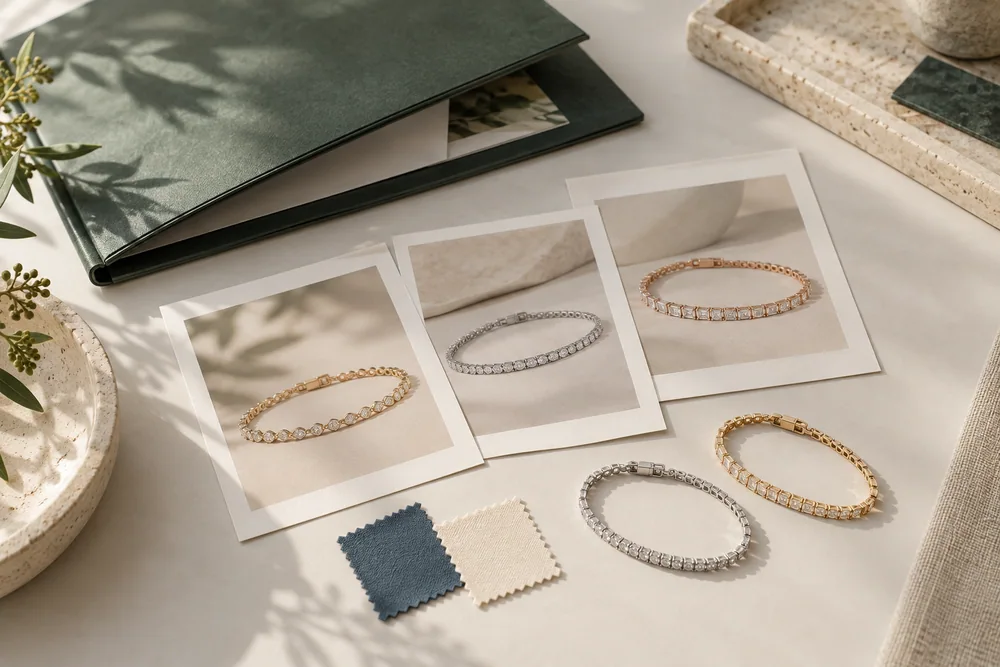
Some pages use editorial styling studies to communicate mood or an occasion. Their captions distinguish them from source product photographs. These images can help explain an outfit or palette; they do not establish the identity, dimensions, material or performance of a particular product.
When preparing a quotation request, identify the library reference or your own authorized design and state the specifications you want reviewed. Do not use an editorial wrist image as a measurement or proof of a finished version. Confirm product and image identity before commissioning product-specific wearing photography.
Source context: Bracelet Works: About the brand ↗
Use the journal and Discover as research aids
Our buyer guides explain decisions such as construction, color and quantity units. Trend and styling notes offer editorial proposals for collection planning. Discover links to selected trade, media and community resources, with source and checking information.
This content is published by the brand and should be read in that context. External examples are learning references; listing a show, publication or social page does not imply affiliation or participation. We separate observable source information from our own suggestions so a buyer can follow the evidence and make a more specific brief.
Bring the question that matters to your project
Start with your intended customer, target market, visual direction and delivery requirement. Select references and explain any requested changes. Add quantity by color or version, the selling unit and packaging expectations.
The next useful step is a discussion of the actual project and its sample requirements. Price, minimum quantities, availability and timing are confirmed for the request. A well-prepared brief makes that conversation more focused and gives the approved result a clear record for later use.
Sources & scope
Source material reviewed for this article. External links are references; no affiliation or endorsement is implied. Sources were checked on 11 October 2026. Trend signals are editorial observations, not evidence of bracelet sales or market size. Event dates, access and membership terms should be confirmed with the organizer.